
Updated August 2026
You ride a 56 cm Trek and you're considering a Ridley or a Scott. Which size? L, presumably, since that should correspond to a 56.
It doesn't. We compared the official geometry figures of four road bikes side by side, and the result is startling: we found two bikes with identical stack whose reach differs by 24 millimetres. In other words, two bikes that look the same height on paper, but on one of them you sit two and a half centimetres more stretched out.
And the single biggest difference isn't even between brands. It's within one brand.
The short answer
Frame size is not a standard. The number 56 or the letter L refers to a seat tube measurement that every manufacturer takes slightly differently – and it tells you nothing about where the handlebar sits. The only comparable figures are reach and stack. When changing bikes, look for your current bike's reach and stack figures, not the same size label.
What reach and stack mean
Both are measured from the bottom bracket – the point where the cranks turn – to the top of the head tube.
Reach is the horizontal distance between those points. It determines how far you have to stretch to the bars. More reach means a more stretched-out position.
Stack is the same distance measured vertically. It determines how high the handlebar sits as standard. More stack means a more upright position.
Why these two? Because they are independent of the frame's shape. Seat tube length, top tube angle and frame type can vary however they like, but reach and stack always tell you the same thing: where your hands are in relation to your feet. That makes them the only reliable way to compare two different bikes.
Comparison: Trek, Ridley and Scott in the same size bracket
Below are the official figures for four road bikes in the size typically recommended for a rider of about 175–183 cm. Trek uses numeric sizes; Ridley and Scott use letters.
| Model and size | Stack | Reach |
|---|---|---|
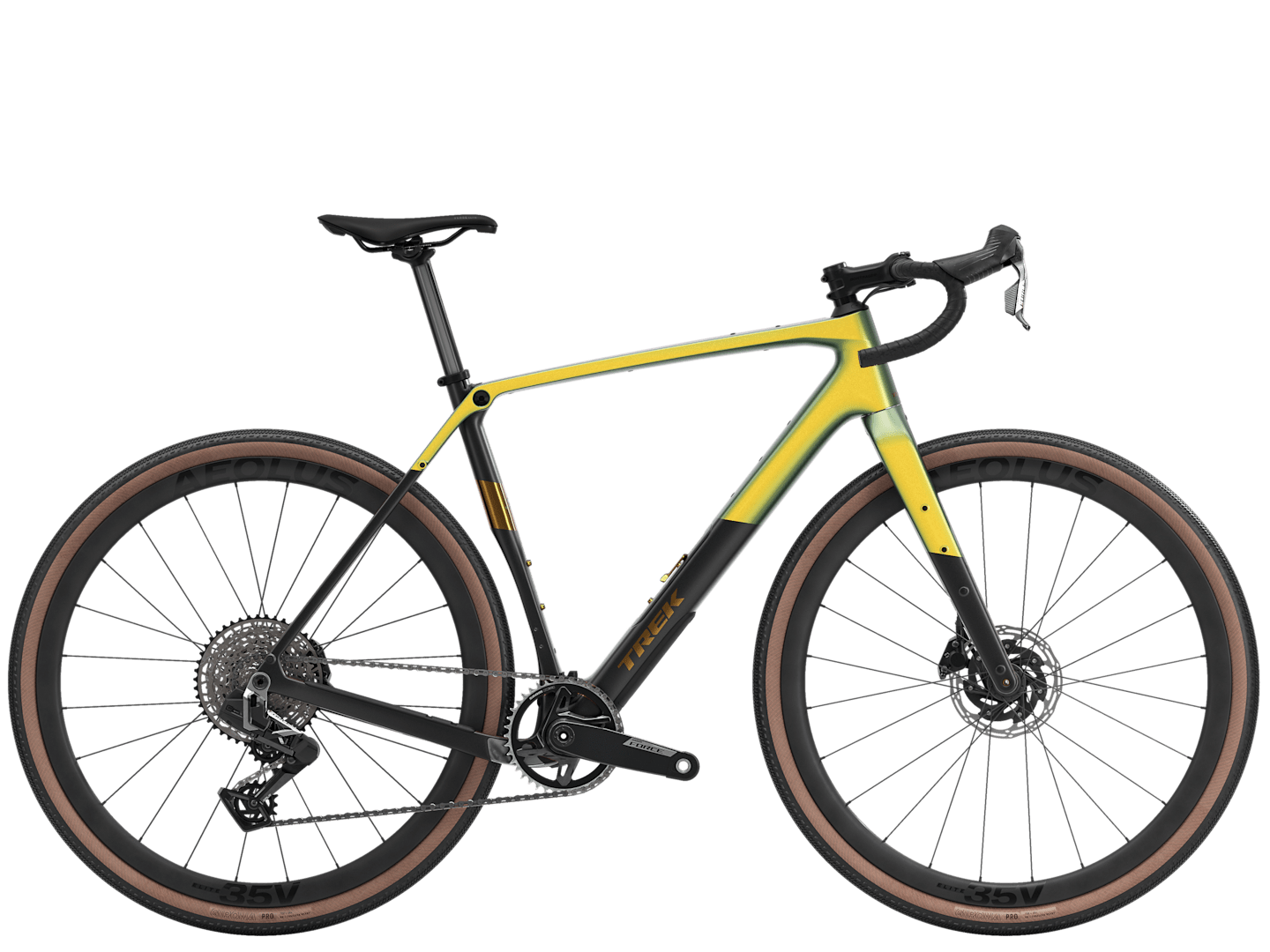
| Trek Émonda SL 56 | 563 mm | 391 mm |
| Scott Addict RC L (2025–) | 564 mm | 403 mm |
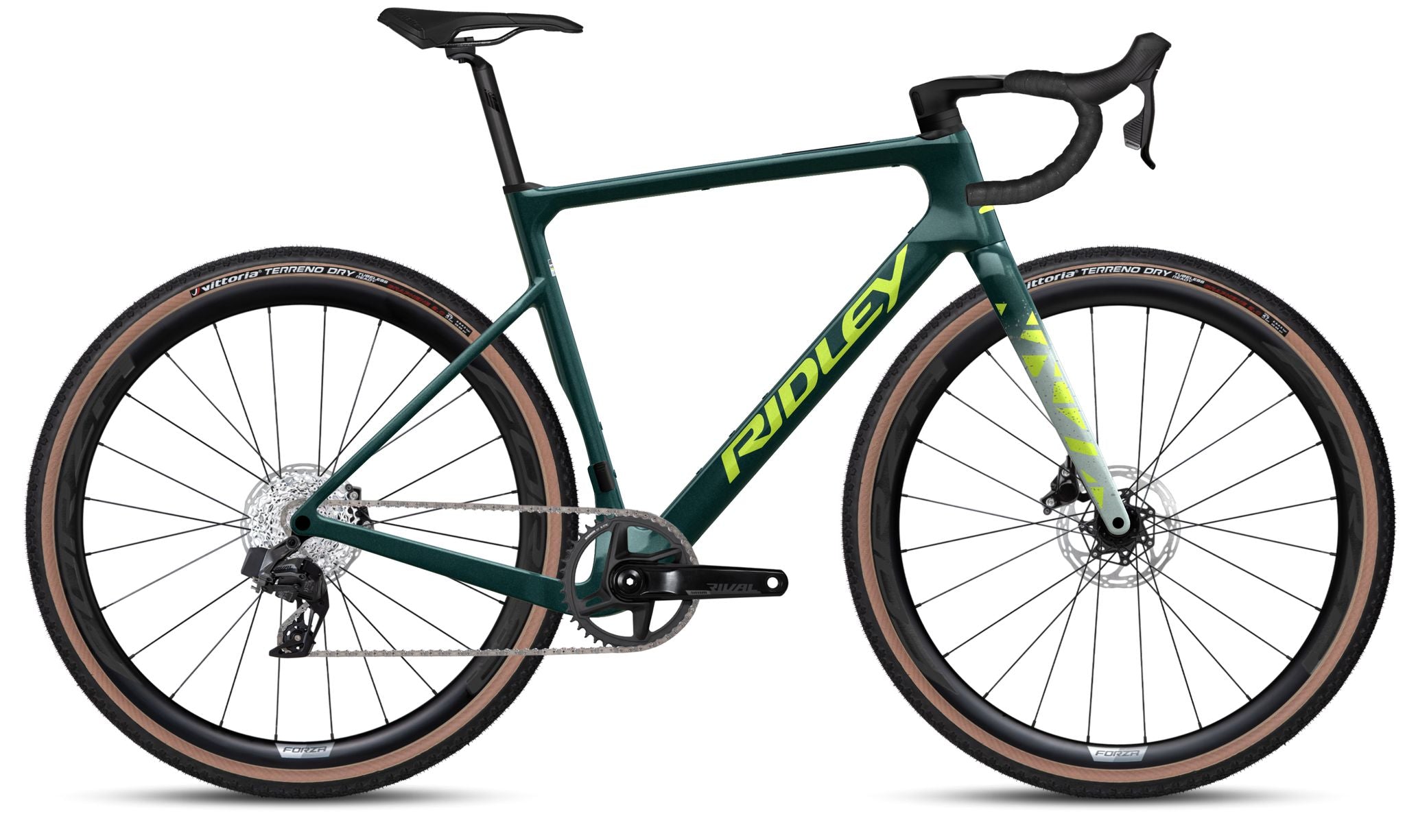
| Ridley Fenix SLiC L | 591 mm | 401 mm |
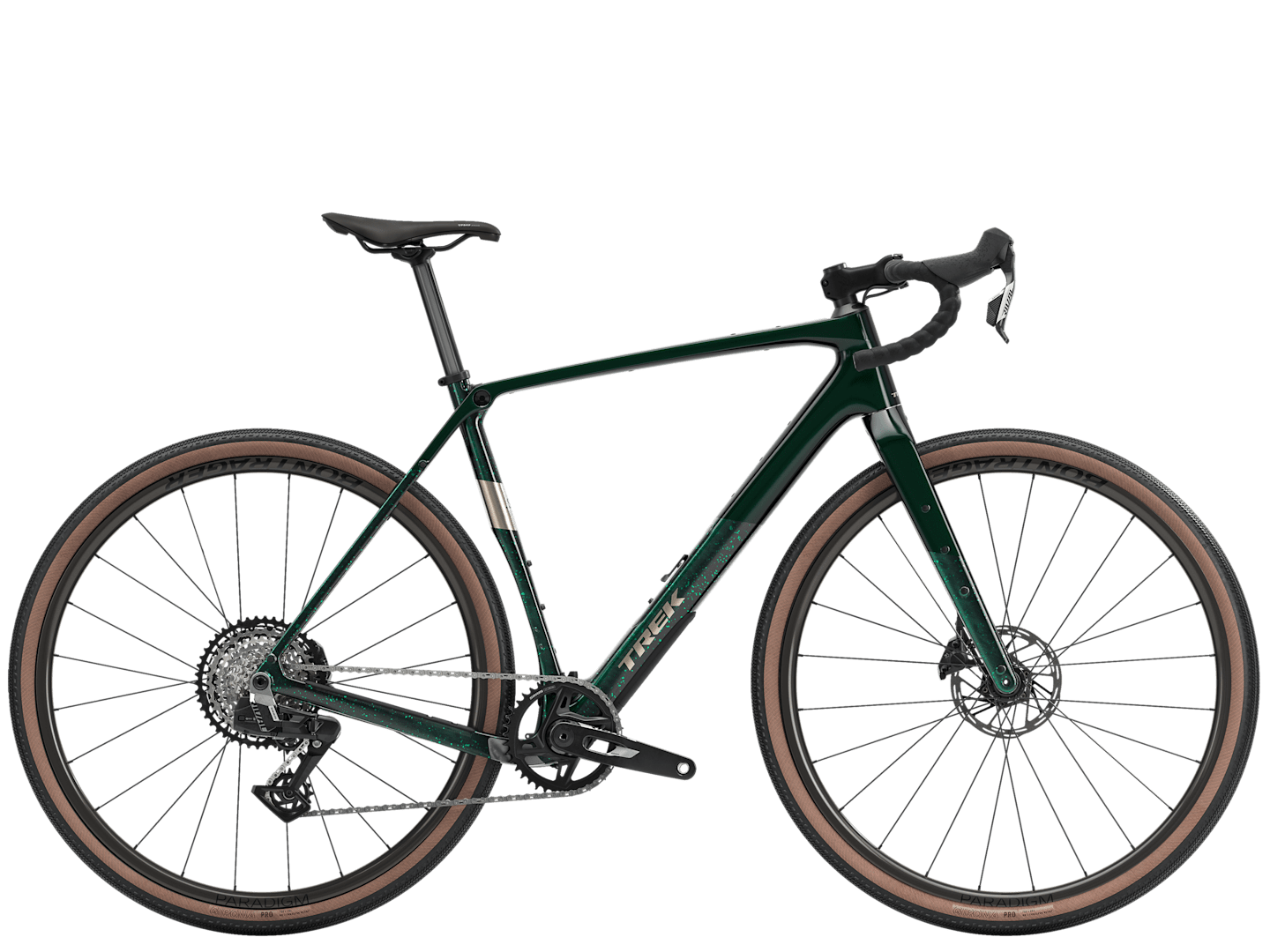
| Trek Domane 56 | 591 mm | 377 mm |
There are two pairs in that table worth looking at closely.
The Émonda 56 and the Scott Addict RC L are effectively the same height – stack of 563 mm against 564 mm, a difference of one millimetre. But the Scott's reach is 12 mm longer. Swap from the Émonda to the Addict and keep the same stem, and you'll be reaching over a centimetre further on every single ride.
The Domane 56 and the Ridley Fenix SLiC L are identical in height – both have a stack of 591 mm. Yet the Ridley's reach is 24 mm longer. Two bikes that, judging by the second column, look identical, but which put you in completely different positions. This is exactly the trap riders fall into when changing bikes.
The biggest difference is within one brand
Two of the bikes in the table are Treks, and both have 56 written on the frame. The Domane's stack is 591 mm and the Émonda's is 563 mm. Same manufacturer, same number, but the handlebar sits almost three centimetres apart in height. Reach goes the other way: 391 mm on the Émonda, 377 mm on the Domane.
This is not an error or an inconsistency but a deliberate design decision. The Domane is an endurance bike, built for a more upright and relaxed position on long rides. The Émonda is a light, climbing-oriented race bike. The number 56 just happens to be the same.
The conclusion is clear: a size label tells you where a bike sits within a range – not what it will feel like underneath you.
Trek abandoned numbers entirely
With the fifth generation of the Domane, Trek made the same transition many other manufacturers made earlier: the traditional sizes 47–62 were replaced with the letters XS–XL.
The industry is moving the same way, and it is more honest. A letter doesn't claim to be a measurement. The number 56 promises a precision it cannot deliver – as the table above demonstrates.
Geometry also changes between model years
The same model doesn't stay the same from year to year. Scott revised the Addict RC, and the change shows up directly in the numbers.
| Scott Addict RC, size L | Stack | Reach |
|---|---|---|
| Previous generation (2023–2024) | 569 mm | 395 mm |
| New generation (2025–) | 564 mm | 403 mm |
On the new Addict RC the reach is 8 mm longer and the handlebar sits 5 mm lower. The seat tube was also shortened considerably, which changes both the exposed seatpost length and the frame's compliance.
The practical consequence: if you ride an older Addict and buy the new one in the same size, your position gets more stretched. For many that's a good thing, but it's worth knowing in advance – not discovering on the first long ride.
How to find the right size when changing bikes
This is the practical heart of the matter. Do this:
- Find your current bike's reach and stack. The figures are in the manufacturer's geometry chart for your model and model year. You can also compare figures across brands in the independent Geometry Geeks database.
- Note your stem length and the number of headset spacers. These tell you whether you've already adjusted your position up or forward – in other words, how far your actual position differs from the frame's baseline figures.
- Find the size on the new bike whose stack is closest to your current one. Stack is harder to correct afterwards: you can only go down by removing spacers, and up with a rising stem or handlebar.
- Correct any reach difference with stem length. Roughly, a 10 mm difference in reach corresponds to a 10 mm difference in stem length. It's a cheap, quick adjustment, so reach is the figure with the give in it.
Example: if you ride a Trek Domane 56 and move to a Ridley Fenix, size L matches your stack exactly. Reach grows by 24 mm, so fit a stem roughly 20–30 mm shorter at the same time and your position stays familiar.
What about mountain, hybrid and electric bikes?
The same principle applies, but the figures are in a different range. Mountain bikes have considerably more reach and less stack, because the riding position is different and the bike is steered more with body weight. On a mountain bike you generally ride a numerically smaller frame than on a road bike.
On e-bikes the geometry largely matches hybrid bikes, but the weight of the bike makes correct sizing matter even more: a wrongly sized 25 kg e-bike is considerably harder to handle than a wrongly sized 10 kg road bike.
Two things the geometry chart doesn't tell you
Stock components matter. Stack is measured to the top of the head tube, not to your hands. If a bike comes with a rising handlebar, your actual hand height is considerably higher than the stack figure suggests. The new Trek Domane is a good example: its stock bar raises the hands 20 mm above the chart's stack value.
Same model, different build, different stem. Manufacturers often use different stem lengths in different sizes and sometimes in different builds. Check this in the spec list – a 10 mm difference in stem cancels out a 10 mm difference in reach.
Frequently asked questions
Is a Trek 56 the same as a Ridley or Scott L?
No. A Trek Domane 56 and a Ridley Fenix SLiC L both have a stack of 591 mm, but the Ridley's reach is 24 mm longer. A Trek Émonda 56 and a Scott Addict RC L are one millimetre apart in stack, but the Scott's reach is 12 mm longer.
Which matters more, reach or stack?
Stack. It's harder to change afterwards. Reach is easily corrected with stem length, but stack can only be lowered by removing spacers and raised with a new bar or stem.
Where do I find my bike's reach and stack figures?
In the manufacturer's geometry chart for your model and model year. You can also compare figures across brands in the independent Geometry Geeks database. We're happy to help too – send us your current bike's model and year and we'll look up the figures for you.
Can a wrongly sized frame be fixed with adjustments?
Partly. One size step can usually be managed with stem length, saddle position and spacers. Two size steps cannot: either the bar ends up too far away, or the bike's weight distribution goes wrong and the steering becomes unstable.
Does a model's geometry change between model years?
Yes, sometimes significantly. The Scott Addict RC's reach in size L grew from 395 mm to 403 mm across a generation change. Always check the chart for the exact model year you're buying.
Why are manufacturers dropping numeric sizes?
Because a number promises a precision it can't deliver. A letter size is more honest: it tells you where the bike sits in the range, and the exact measurements are read from the geometry chart. Trek moved to letter sizes with the fifth generation Domane.
Summary
A size label is a starting point, not an answer. Two bikes can be identical in height and still differ by two and a half centimetres in where your hands sit – and that difference is felt on every ride.
When changing bikes, note your current bike's reach and stack and compare them with the new bike's figures. It takes five minutes and saves years of uncomfortable riding.
And if you'd rather not do it alone: we'll do the size comparison for you. Send your current bike's model and year to myynti@emiliasport.fi or call +358 50 470 4686, and we'll tell you which size suits you on the new bike. For a more precise measurement, book our BikeFit service at our Tampere store.
Browse our range: road bikes, endurance road bikes and aero road bikes.
Read also: Which frame size should you choose? and BikeFit – why the right riding position matters
Written by the Emilia Sport team
Emilia Sport has been a bike shop since 1978. Our staff have up to 45 years of experience in the bicycle trade, and we carry out BikeFit measurements and size comparisons at our Tampere store every day. We're happy to help by phone too: myynti@emiliasport.fi / +358 50 470 4686.
The geometry figures in this article are based on manufacturers' published geometry charts. Geometry is updated between model years, so always check the figures for the specific year you're buying.